
Microsoft Dynamics CRM Implementation(Future Operating Model Project)

BUSINESS CHALLENGE

A leading superannuation and financial planning organisation, serving over 57,000 clients and managing more than $14 billion in funds, sought to modernise its engagement and client management processes through the Future Operating Model (FOM) transformation initiative.

The project aimed to improve the client experience by streamlining Sales, Marketing, and Customer Service functions, leveraging Microsoft Dynamics CRM as the central platform. The CRM would integrate with internal systems and SharePoint to support document management and workflow automation.

The challenge was to validate functionality, integrations, and workflows across multiple modules within a tight project timeline, while ensuring the solution met the complex business logic across customer onboarding, marketing campaigns, and service operations. Testing had to guarantee system reliability for both web and Outlook clients, across different environments and configurations.

STRATEGIC SOLUTION

Adactin was engaged to provide end-to-end functional testing services for the Microsoft Dynamics CRM implementation as part of the FOM project. The testing approach was risk-based and Agile, executed across five sprints followed by a full regression cycle to ensure complete functional and integration coverage.

Sprint-Based Testing Delivery

Each sprint focused on executing test cases, identifying high-risk areas, and verifying defect fixes:

Sprint 1–5 Execution:

  • Executed identified test cases per sprint scope.
  • Conducted regression testing from prior sprints to validate stability.
  • Collaborated closely with developers and business analysts to triage and retest issues.
  • Logged and tracked defects through Team Foundation Server (TFS).
  • Performed risk assessments and communicated test findings to stakeholders.

Regression Testing Phase:

  • Conducted end-to-end scenario testing after sprint completion to validate that all bug fixes and system enhancements did not introduce regressions.
  • Ensured compliance with functional requirements, system workflows, and CRM SharePoint integration.

Tools & Methodologies

  • Tools Used: Microsoft Excel (test case mapping and execution), Team Foundation Server (defect tracking and reporting).
  • Platforms Tested: Web client on Internet Explorer 10 (Win7 SP2). Outlook client with CRM 2013 plugin on Outlook 2010
  • Approach: Agile testing with a focus on risk prioritisation, ensuring maximum test coverage within constrained timelines

BUSINESS OUTCOMES

  • 400+ defects identified and resolved, significantly improving system stability and functional accuracy.
  • Zero critical post-production issues in key business processes.
  • Comprehensive coverage: All major CRM modules – Sales, Marketing, and Client Services, were validated end-to-end.
  • Business process optimisation: Provided feedback that improved data flow and user navigation across CRM modules.
  • Empowered users: Conducted training sessions for the client’s test team, ensuring knowledge transfer and user confidence before go-live.
  • Effective defect lifecycle management: Centralised defect tracking in TFS streamlined coordination between testers, developers, and project managers.
  • Improved turnaround time: Agile sprints with continuous regression enabled faster releases without compromising quality.

References

  • Tools & Platforms: Microsoft Dynamics CRM 2013, SharePoint, TFS, Internet Explorer 10, Outlook 2010.
  • Testing Methodology: Agile (Sprint-based Risk-Based Testing + Regression).

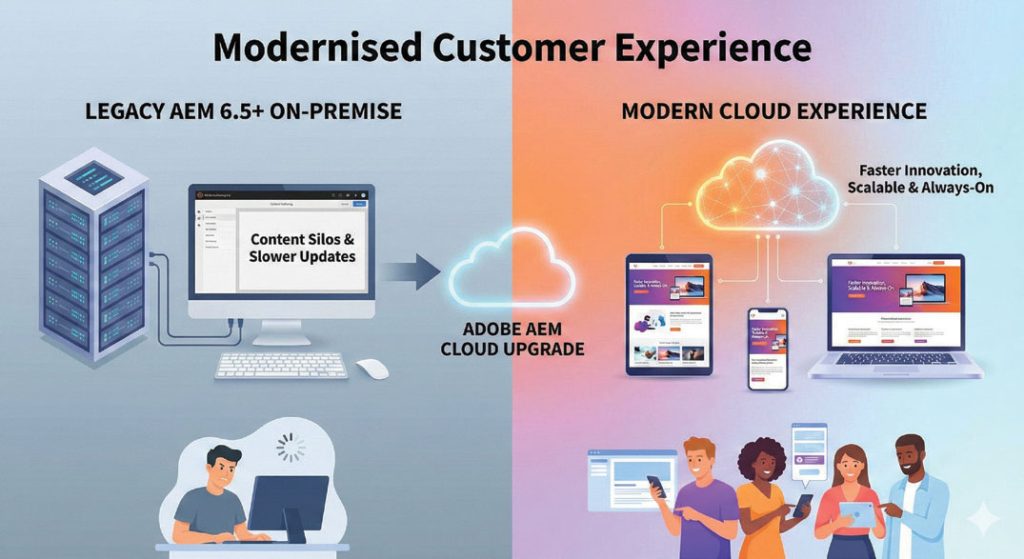
Modernising Customer Experience with an Adobe AEM 6.5+ Cloud Upgrade

BUSINESS CHALLENGE

The client wanted to modernise its digital experience by upgrading from Adobe Experience Manager (AEM) 6.4 to AEM 6.5+ on Adobe Cloud. The goal was to leverage new AEM features to enhance user experience, boost website performance, and ultimately increase ticket sales and customer engagement at one of Australia’s most iconic cultural landmarks.

However, the existing client website relied heavily on custom-built components and legacy dialogs that were incompatible with AEM 6.5. Many of these were built using older versions of AEM libraries, including deprecated Classic UI and non-standard APIs. The upgrade demanded a complete rewrite of these elements to AEM Commons version 4.x and migration of dialogs to Coral 3 UI.

In addition to the development challenges, the client’s team faced testing limitations, their current performance testing scripts were unreliable, and the testing processes lacked automation, leading to slow feedback cycles and inconsistent results.

STRATEGIC SOLUTION

Adactin partnered with the client to deliver both technical and quality assurance expertise, working closely with the client’s internal development and business-as-usual teams to ensure a seamless upgrade.

Technical Upgrade

  • Conducted a full audit of existing AEM 6.4 components and identified those requiring rewrites for AEM 6.5 compliance.
  • Re-engineered custom components and dialogs to align with AEM Commons v4.x and Coral 3 UI, ensuring compatibility with Adobe Cloud standards.
  • Streamlined source control and CI/CD processes using Git and Bitbucket for version management.

Testing & Quality Enablement

  • Introduced structured testing methodologies to replace ad hoc manual processes.
  • Recommended and implemented improved functional and performance testing strategies, including script optimisation and result validation.
  • Enhanced collaboration between developers, testers, and business users through JIRA-based defect management and continuous feedback loops.

Technology Stack

AEM 6.5+, Java 8, HTML, CSS, jQuery, Git, Bitbucket, JIRA

BUSINESS OUTCOMES

  • Seamless upgrade to AEM 6.5+ with minimal disruption and downtime.
  • Improved website usability through updated dialogs and modernised UI components.
  • Enhanced performance and reliability, with Adactin validating improvements via comprehensive performance testing.
  • Higher quality, maintainable codebase, simplifying future upgrades and integrations.
  • Faster turnaround time for deployments due to streamlined testing and release processes.
  • Consistent and scalable testing framework, empowering the client’s internal team to maintain quality going forward

Results

  • Primary Source: Adactin Case Study – AEM Upgrade (Adactin Group Pty Ltd, 2019).
  • Tools & Technologies: AEM 6.5+, Java 8, HTML, CSS, jQuery, Git, Bitbucket, JIRA.
  • Business Area: Digital Experience Enhancement for a key client.

Accessibility Testing of a NSW Government Portal

BUSINESS CHALLENGE

A major NSW Government agency developed a comprehensive digital service delivery platform to enable citizens to access government services online — including applications, payments, appointments, and document submissions. The platform served as a single point of access to multiple agencies and was expected to comply with the Web Content Accessibility Guidelines (WCAG) 2.1 Level AA, in alignment with the NSW Government Digital Service Standard and the Commonwealth Disability Discrimination Act 1992.

Given the platform’s role in delivering essential services such as healthcare, licensing, and social programs, accessibility compliance was critical to ensuring equitable access for all residents, including people with disabilities. The system’s complexity with multi-step forms, dynamic content, third-party integrations, and interactive elements created challenges in maintaining consistent accessibility across all modules.

The agency recognised accessibility as a key enabler of digital inclusion, not just a compliance requirement. However, due to limited internal expertise and tooling, a specialised accessibility partner was required to assess the platform against WCAG 2.1 standards, identify barriers for users with disabilities, and provide actionable guidance to achieve compliance in a sustainable manner.

STRATEGIC SOLUTION

Adactin delivered a comprehensive Accessibility Testing program aligned with WCAG 2.1 Level AA, Section 508, EN 301 549, and the Australian Government Digital Service Standard. The approach combined automated testing, manual expert evaluation, and assistive technology validation to ensure complete coverage across the platform.

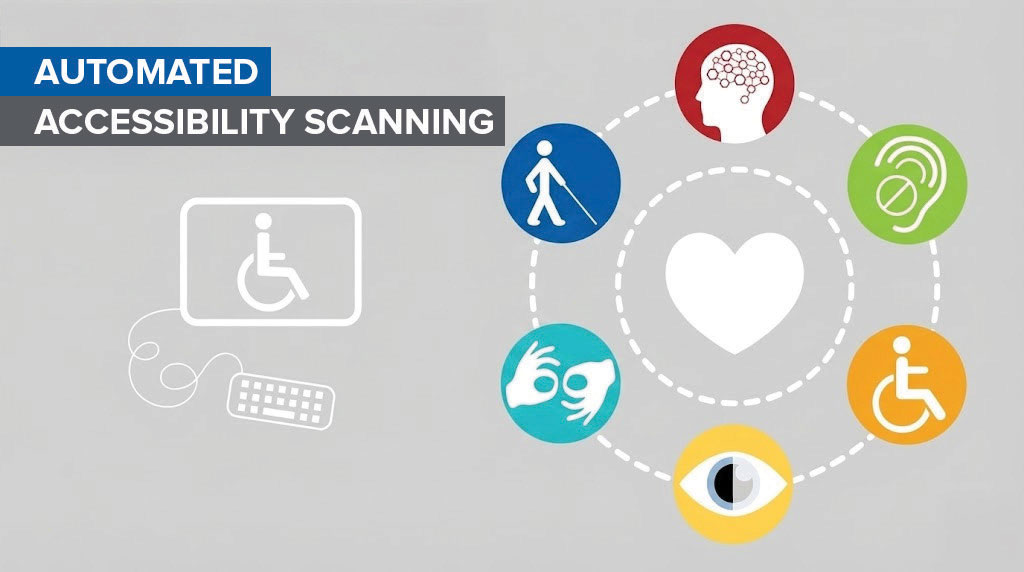
Automated Accessibility Scanning

Industry-standard tools were used to perform large-scale scans for common accessibility issues, including:

  • Semantic HTML and ARIA implementation
  • Colour contrast and visual hierarchy
  • Keyboard navigation and focus management
  • Form labels and error associations
  • Alternative text for non-text content
  • Heading and link structure

Manual Expert Evaluation

Our accessibility specialists delivered in-depth, hands-on testing that went beyond automated scanning tools. Through comprehensive manual accessibility assessments, the team uncovered critical usability and compliance issues that automated solutions often miss ensuring the customer’s digital platforms were inclusive, intuitive, and usable for all users.

This expert-led approach validated how real users interacted with the applications using assistive technologies, helping the organisation reduce accessibility risk while improving overall user experience. The testing focused on areas most important to end users and regulators, including:

  • Logical reading order and keyboard navigation, ensuring content flowed naturally and could be accessed without a mouse
  • Accurate handling of dynamic content and live regions, so updates were announced clearly and at the right time
  • Clear error messaging and recovery guidance, enabling users to understand, correct, and progress with confidence
  • Accessible multi-step forms, supporting seamless completion of complex user journeys
  • Consistent focus visibility and movement, providing clarity and control across all interactive elements

Assistive Technology Validation

The platform was tested with leading assistive technologies to validate real-world accessibility:

  • Screen readers: JAWS, NVDA, VoiceOver
  • Screen magnifiers: ZoomText, Windows Magnifier
  • Voice recognition: Dragon NaturallySpeaking
  • Keyboard-only navigation

Testing was performed across major browsers (Chrome, Firefox, Edge, Safari) and operating systems (Windows, macOS, iOS, Android).

User Journey Analysis

Critical user journeys such as login, service application, document upload, payment, and support access were evaluated to identify barriers impacting task completion for users relying on assistive technologies.

Reporting and Remediation Guidance

A comprehensive audit report provided:

  • Executive summary of key findings and business impact
  • Issue catalogue mapped to WCAG 2.1 success criteria and severity
  • Reproduction steps with screenshots and evidence
  • User impact assessment by disability type
  • Remediation recommendations with code-level guidance
  • Prioritised remediation roadmap and compliance gap analysis

BUSINESS OUTCOMES

The engagement provided the agency with a clear roadmap to achieving and maintaining accessibility compliance:

  • 27 accessibility issues were identified and categorised by severity, with prioritised remediation guidance.
  • A WCAG 2.1 Level AA conformance roadmap was established, outlining steps to achieve compliance.
  • Critical barriers were removed that prevented access to essential government services.
  • Accessibility testing processes were embedded into the agency’s delivery lifecycle, including CI/CD pipeline integration.
  • Training and knowledge transfer equipped design, development, and content teams to build and maintain accessible solutions.
  • Design system improvements ensured reusable components met accessibility standards.
  • The overall user experience improved through clearer navigation, visible focus indicators, consistent announcements, and improved readability.
  • The agency achieved measurable progress toward digital inclusion, ensuring equitable access for all users.

DEFECT SUMMARY

Accessibility testing identified a range of issues primarily linked to platform-level behaviour within the PEGA framework, including inconsistent screen-reader announcements, missing ARIA labels, focus management issues, and unannounced error messages. While many were Minor and scheduled for future remediation, a subset of Major and Critical issues requires vendor collaboration for resolution. These findings informed a targeted remediation plan aimed at improving alignment with WCAG 2.1 AA standards and enhancing overall accessibility resilience.

References

  • Frameworks: WCAG 2.1, Section 508, EN 301 549, Australian Government Digital Service Standard
  • Tools: Axe DevTools, WAVE, Lighthouse, Colour Contrast Analyser, NVDA, JAWS, Dragon NaturallySpeaking, Pa11y, Tenon.io
  • Legislation: Disability Discrimination Act 1992, NSW Government Digital Service Standards

NPP Implementation for Real-Time Payments at a Big Four Bank

BUSINESS CHALLENGE

A major Australian bank required integration with the New Payments Platform (NPP) and the Osko real-time overlay to support instant on-us and off-us payments across retail and corporate channels. The client needed a solution to process ISO 20022-based messages, support PayID lookups, and enable secure, low-latency clearing and settlement while fitting into existing systems.

Objectives:

  • Implement Osko/NPP end-to-end capabilities for retail and corporate channels.
  • Ensure reliable on-us/off-us transaction flows with PayID support.
  • Integrate with existing backend systems with minimal disruption.
  • Deliver repeatable artefacts (scripts, docs, release notes) for handover.

STRATEGIC SOLUTION

Adactin implemented NPP/Osko capabilities using an Agile (Scrum) approach with three- week sprints. Workstreams included requirements analysis, iterative development, testing, and handover.

  • Performed requirements discovery with business analysts and SMEs to map end-to-end flows.
  • Delivered a proof of concept for a core payment scenario to validate architecture and message flows.
  • Developed and customised payment modules to support on-us and off-us transactions, PayID resolution, and ISO 20022 messaging.
  • Executed unit testing using an asset simulator to verify transaction processing.
  • Collaborated with infrastructure and test teams to apply configuration changes and triage issues.
  • Versioned deliverables in SVN and produced release notes, traceability matrices, and handover documentation.

Technology & tools: Groovy, MySQL, Windows platform, SOAP webservices, SVN, Jira, Confluence, Asset Simulator.

Cloud & Infrastructure Validation

Adactin liaised with the client’s infrastructure and platform teams to validate environment readiness and transaction flows. Tests verified message routing, API responsiveness, and integration points. Configuration changes were applied and validated in collaboration with architecture and test teams before handover.

BUSINESS OUTCOMES

  • Successful deployment of Osko/NPP capabilities supporting on-us and off-us transactions for retail and corporate channels.
  • PayID-based addressing implemented, enabling simplified recipient identification.
  • Robust integration with legacy systems using ISO 20022 messaging patterns.
  • Deliverables and operational documentation handed over (SVN, release notes, traceability matrix) to accelerate support and ongoing maintenance.
  • Improved operational readiness: solution designed to support real-time clearing, richer data payloads, and overlay services.

Test Automation Strategy for an Australian University

BUSINESS CHALLENGE

The University operated on several core enterprise systems – Dynamics CRM, PeopleSoft, and ServiceNow each supporting critical academic, administrative, and student functions. Over time, these systems evolved independently with distinct testing practices, inconsistent regression coverage, and limited integration visibility across platforms. With major transformation programs planned, the university faced growing challenges in assuring quality across interdependent systems:

  • Absence of a unified test strategy, leading to inconsistent approaches and duplicated effort.
  • Limited automation maturity, resulting in long regression cycles and delayed releases.
  • Inadequate visibility into test coverage and defect trends across platforms.
  • No single source of truth for test assets, making traceability to business requirements difficult.
  • Manual effort dependency, increasing the risk of human error during frequent release cycles

Given the scale and complexity of the ecosystem, the university sought to establish a comprehensive automation test strategy that could bring structure, efficiency, and risk transparency across its enterprise testing operations.

STRATEGIC SOLUTION

Adactin was engaged to design and implement an enterprise-grade automation test strategy that would align with the university’s digital roadmap, governance model, and delivery cadence. The engagement aimed to provide a structured and scalable approach to test automation while integrating seamlessly into the university’s existing DevOps ecosystem.

The solution followed a four-phase consulting and implementation methodology, combining risk-based prioritisation, cross-platform assessment, and future-ready automation enablement.

Assessment & Discovery

Adactin conducted in-depth discovery workshops across business, functional, and technical stakeholders to baseline current testing practices and pain points. The activities included:

  • Reviewing existing test artefacts and understanding automation maturity across Dynamics CRM,
    PeopleSoft, and ServiceNow.
  • Identifying business-critical user journeys and workflows essential for student enrolment, HR, finance,
    and service operations.
  • Mapping testing processes, environments, and toolchain dependencies.
  • Assessing test data management practices and environment stability constraints.
  • Performing a readiness assessment to evaluate skills, tools, and infrastructure required for automation
    scale-up.

Framework Design & Tool Integration

Building on the assessment findings, Adactin designed a unified automation framework to standardise testing across UI and API layers. The framework was architected for reusability, maintainability, and ease of integration with the university’s CI/CD environment. Key design elements included:

  • Centralised test repository integrating Tricentis Tosca with qTest and GitHub Actions.
  • Reusable test component libraries for Dynamics CRM, PeopleSoft, and ServiceNow.
  • API-level test suites to validate integration points between systems.
  • Integration with GitHub Actions pipelines for automated nightly and on-demand regression runs.
  • Unified reporting layer using open-source dashboards (Power BI, Grafana) for real-time visibility

This framework enabled cross-platform test consistency, significantly reducing duplication and manual effort while establishing a foundation for scalable regression automation.

Risk-Based Test Prioritisation

Recognising that full automation coverage was neither immediate nor cost-effective, Adactin applied its proven Risk-Based Testing (RBT) methodology to define automation priorities.

The RBT model quantified risk using three dimensions – Business Impact, Failure Probability, and Complexity of Recovery – allowing the university to focus automation efforts where they deliver the highest value.

Activities included:

  • Categorising all processes and user journeys by business criticality and risk exposure.
  • Mapping test cases to risk categories (High, Medium, Low) to drive sequencing and resource focus.
  • Prioritising early automation for high-impact workflows – e.g., student enrolment, admissions, payroll,
    and service requests.
  • Leveraging risk metrics to guide ongoing regression selection and continuous test optimisation.

This structured approach ensured early automation benefits, reduced time-to-value, and maximised return on investment.

Governance, Reporting, & Continuous Improvement

To ensure long-term sustainability, Adactin established a governance framework that defined roles, reporting cadence, and continuous improvement mechanisms. Key governance deliverables included:

  • Test automation operating model covering ownership, standards, and maintenance procedures.
  • Execution dashboards providing end-to-end visibility of results, coverage, and defect leakage.
  • Continuous learning framework enabling the university’s internal QA teams to independently extend
    automation.
  • Defined metrics and KPIs to measure automation success – including coverage %, reusability index,
    defect turnaround time, and cycle time reduction

Through knowledge transfer and capability uplift, the university’s QA teams were empowered to manage and scale automation within their delivery streams.

BUSINESS OUTCOMES

The engagement delivered measurable improvements in testing efficiency, governance, and release confidence:

  • Unified Strategy – A single, enterprise-wide automation strategy aligning all three platforms under a
    consistent delivery and governance model.
  • Accelerated Regression – Regression execution time reduced by up to 45% in early iterations.
  • Risk Visibility – RBT-driven prioritisation improved transparency into business-critical coverage.
  • Cross-Platform Validation – End-to-end business process coverage across CRM, PeopleSoft, and
    ServiceNow.
  • Actionable Insights – Real-time reporting and dashboards enabled data-driven release decisions.
  • Knowledge Transfer – The QA teams trained and equipped to own and expand automation
    independently.

References

  • Frameworks: Adactin Automation Framework, Risk-Based Testing (RBT) Model
  • Tools: Tricentis Tosca, qTest, GitHub Actions, Power BI, Grafana
  • Technologies Covered: Microsoft Dynamics CRM, PeopleSoft, ServiceNow
  • Governance Model: Continuous Integration (CI/CD) with test data and results management
  • Methodology Alignment: Risk-Informed Automation and Continuous Quality Enablement

Paperless & Seamless Medicare Claim Automation

BUSINESS CHALLENGE

Medicare claim submissions had long depended on paper-based, manual processing, making the workflow slow, error-prone, and resource-intensive. For healthcare organisations operating busy clinics, this meant staff were spending significant time handling forms instead of supporting patient care. More importantly, the Australian Government’s Guaranteeing Medicare Payment Systems (GMAPS) mandate introduced a strict requirement: healthcare providers needed to move to a paperless, near real-time Medicare claim submission model by March 2022.

The client, a healthcare organisation running a comprehensive “Medical Clinic Administration” product, recognised that their existing claim submission process could not meet these new expectations. The legacy workflow involved manual tracking of patient details, employee and doctor information, appointments, and financial records. The lack of automation created delays, introduced avoidable errors, and limited the client’s ability to comply with the new regulatory timeline.

To keep pace with regulatory change, improve accuracy, and support operational efficiency, the client urgently needed a secure, API-driven, real-time Medicare claim processing solution that eliminated manual intervention and integrated seamlessly with their existing clinical systems.

STRATEGIC SOLUTION

With the GMAPS deadline looming, Adactin guided the client toward an API-first architecture, enabling all claim transactions to be processed programmatically and validated instantly. The client introduced a series of APIs within their Claim Process Application, designed specifically to:

  • Validate Medicare claim eligibility,
  • Submit claim requests in near real-time,
  • Reduce staff dependency on manual handling, and
  • Build an auditable, rule-driven workflow aligned with GMAPS requirements.

Adactin’s testing practice ensured the solution was robust, sustainable, and easy to maintain. Automation-ready API testing frameworks were introduced, replacing ad-hoc manual design with a repeatable, scalable, and optimised process. The partnership between the client and their external API provider was strengthened through shared API workspaces, giving every stakeholder easy access to endpoints, collections, and workflows.

BUSINESS OUTCOMES

The new API-driven Medicare claim workflow delivered a faster, error-free, and regulation-compliant process. The improvements were substantial, both operationally and strategically:

From an API Testing & Delivery Perspective:

  • Optimised test case generation, reducing design time dramatically.
  • Easy modification and maintenance, supporting rapid business rule updates.
  • Transition from ad-hoc efforts to a structured, repeatable testing process.
  • Faster and more accurate validation of claims compared to manual methods.

From an API Testing & Delivery Perspective:

  • Optimised test case generation, reducing design time dramatically.
  • Easy modification and maintenance, supporting rapid business rule updates.
  • Transition from ad-hoc efforts to a structured, repeatable testing process.
  • Faster and more accurate validation of claims compared to manual methods.

The outcome is a paperless, compliant, highly efficient Medicare claim system that positions the client for long-term digital transformation.