
 Australia
 Singapore
 India
India
BUSINESS CHALLENGE
A major NSW Government agency developed a comprehensive digital service delivery platform to enable citizens to access government services online — including applications, payments, appointments, and document submissions. The platform served as a single point of access to multiple agencies and was expected to comply with the Web Content Accessibility Guidelines (WCAG) 2.1 Level AA, in alignment with the NSW Government Digital Service Standard and the Commonwealth Disability Discrimination Act 1992.
Given the platform’s role in delivering essential services such as healthcare, licensing, and social programs, accessibility compliance was critical to ensuring equitable access for all residents, including people with disabilities. The system’s complexity with multi-step forms, dynamic content, third-party integrations, and interactive elements created challenges in maintaining consistent accessibility across all modules.
The agency recognised accessibility as a key enabler of digital inclusion, not just a compliance requirement. However, due to limited internal expertise and tooling, a specialised accessibility partner was required to assess the platform against WCAG 2.1 standards, identify barriers for users with disabilities, and provide actionable guidance to achieve compliance in a sustainable manner.
STRATEGIC SOLUTION
Adactin delivered a comprehensive Accessibility Testing program aligned with WCAG 2.1 Level AA, Section 508, EN 301 549, and the Australian Government Digital Service Standard. The approach combined automated testing, manual expert evaluation, and assistive technology validation to ensure complete coverage across the platform.
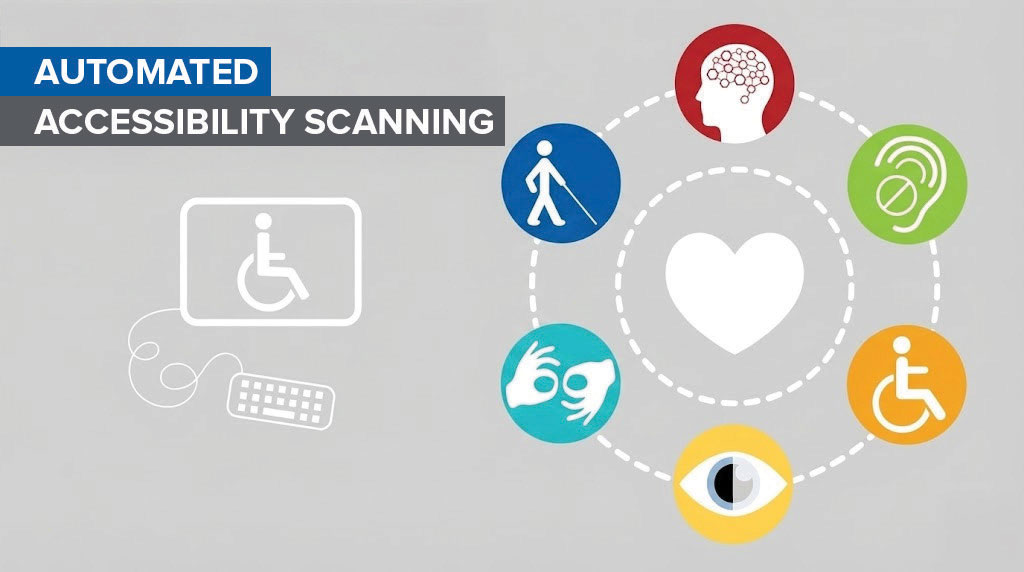
Automated Accessibility Scanning
Industry-standard tools were used to perform large-scale scans for common accessibility issues, including:
- Semantic HTML and ARIA implementation
- Colour contrast and visual hierarchy
- Keyboard navigation and focus management
- Form labels and error associations
- Alternative text for non-text content
- Heading and link structure
Manual Expert Evaluation
Our accessibility specialists delivered in-depth, hands-on testing that went beyond automated scanning tools. Through comprehensive manual accessibility assessments, the team uncovered critical usability and compliance issues that automated solutions often miss ensuring the customer’s digital platforms were inclusive, intuitive, and usable for all users.
This expert-led approach validated how real users interacted with the applications using assistive technologies, helping the organisation reduce accessibility risk while improving overall user experience. The testing focused on areas most important to end users and regulators, including:
- Logical reading order and keyboard navigation, ensuring content flowed naturally and could be accessed without a mouse
- Accurate handling of dynamic content and live regions, so updates were announced clearly and at the right time
- Clear error messaging and recovery guidance, enabling users to understand, correct, and progress with confidence
- Accessible multi-step forms, supporting seamless completion of complex user journeys
- Consistent focus visibility and movement, providing clarity and control across all interactive elements
Assistive Technology Validation
The platform was tested with leading assistive technologies to validate real-world accessibility:
- Screen readers: JAWS, NVDA, VoiceOver
- Screen magnifiers: ZoomText, Windows Magnifier
- Voice recognition: Dragon NaturallySpeaking
- Keyboard-only navigation
Testing was performed across major browsers (Chrome, Firefox, Edge, Safari) and operating systems (Windows, macOS, iOS, Android).
User Journey Analysis
Critical user journeys such as login, service application, document upload, payment, and support access were evaluated to identify barriers impacting task completion for users relying on assistive technologies.
Reporting and Remediation Guidance
A comprehensive audit report provided:
- Executive summary of key findings and business impact
- Issue catalogue mapped to WCAG 2.1 success criteria and severity
- Reproduction steps with screenshots and evidence
- User impact assessment by disability type
- Remediation recommendations with code-level guidance
- Prioritised remediation roadmap and compliance gap analysis
BUSINESS OUTCOMES
The engagement provided the agency with a clear roadmap to achieving and maintaining accessibility compliance:
- 27 accessibility issues were identified and categorised by severity, with prioritised remediation guidance.
- A WCAG 2.1 Level AA conformance roadmap was established, outlining steps to achieve compliance.
- Critical barriers were removed that prevented access to essential government services.
- Accessibility testing processes were embedded into the agency’s delivery lifecycle, including CI/CD pipeline integration.
- Training and knowledge transfer equipped design, development, and content teams to build and maintain accessible solutions.
- Design system improvements ensured reusable components met accessibility standards.
- The overall user experience improved through clearer navigation, visible focus indicators, consistent announcements, and improved readability.
- The agency achieved measurable progress toward digital inclusion, ensuring equitable access for all users.
DEFECT SUMMARY
Accessibility testing identified a range of issues primarily linked to platform-level behaviour within the PEGA framework, including inconsistent screen-reader announcements, missing ARIA labels, focus management issues, and unannounced error messages. While many were Minor and scheduled for future remediation, a subset of Major and Critical issues requires vendor collaboration for resolution. These findings informed a targeted remediation plan aimed at improving alignment with WCAG 2.1 AA standards and enhancing overall accessibility resilience.
References
- Frameworks: WCAG 2.1, Section 508, EN 301 549, Australian Government Digital Service Standard
- Tools: Axe DevTools, WAVE, Lighthouse, Colour Contrast Analyser, NVDA, JAWS, Dragon NaturallySpeaking, Pa11y, Tenon.io
- Legislation: Disability Discrimination Act 1992, NSW Government Digital Service Standards